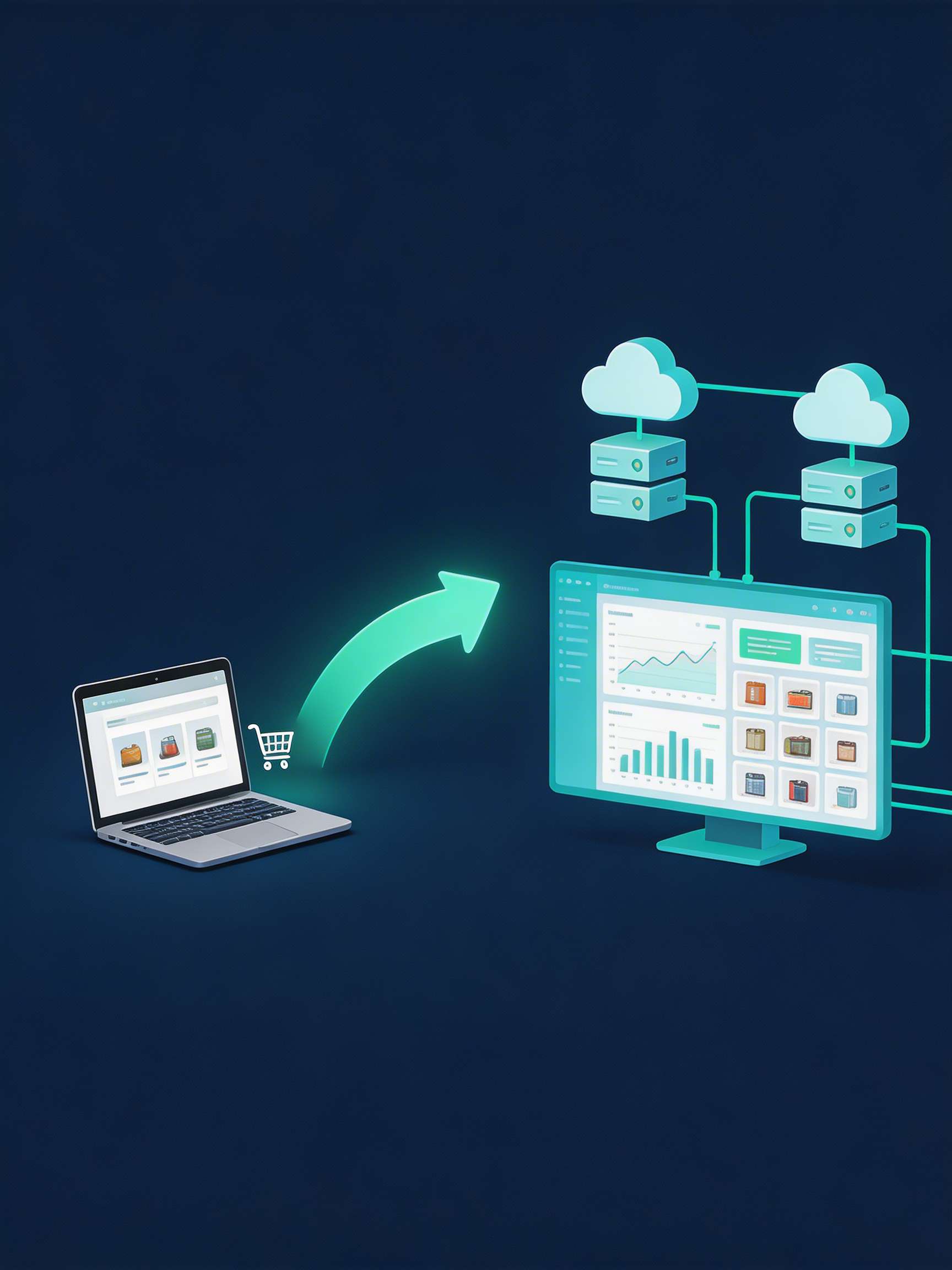
How to Architect Your Ecommerce Platform for Growth: Startup to Enterprise
Ecommerce growth rarely fails because of weak demand. More often, it fails because the underlying system cannot handle scale. Many businesses launch quickly with simple ecommerce setups, only to discover later that their platform struggles with rising traffic, expanding product catalogs, complex integrations, or operational demands.
Architecting your ecommerce platform for growth means thinking beyond launch. It requires designing infrastructure that supports long-term scalability, performance, flexibility, and data visibility. The decisions made at the startup stage often determine whether the platform can evolve smoothly into an enterprise-grade system—or whether it will require a costly rebuild.
For growth-focused companies, ecommerce architecture is not just a technical consideration. It is a strategic one.
Start With Long-Term Vision, Even at Startup Stage
Speed matters in early stages. Startups need to validate ideas quickly and start generating revenue. However, speed should not come at the expense of structural planning.
Even at launch, your ecommerce platform should be built with modularity in mind. Product structure, content architecture, integrations, and hosting environment should allow for future expansion. A platform that works well for 100 orders per month may collapse under 10,000 if scalability was not considered.
Early architectural thinking should answer key questions. Can this platform support larger catalogs? Can it handle regional expansion? Can integrations evolve without requiring a full rebuild? Planning for these possibilities early prevents operational friction later.
Performance Must Scale With Traffic
As ecommerce businesses grow, marketing campaigns become more aggressive. Traffic spikes during promotions, product launches, or seasonal events can overwhelm poorly structured systems.
A scalable ecommerce platform must prioritise performance from day one. Cloud hosting, optimised databases, caching mechanisms, and content delivery networks should not be afterthoughts. Page speed directly impacts conversion rates, and even small delays can reduce customer engagement.
Enterprise-ready platforms are designed to handle growth without degradation. When traffic increases, the infrastructure should scale automatically rather than collapse under load. Businesses that ignore this principle often face costly emergency fixes during peak sales periods.
Avoid Building a Monolithic System
As ecommerce operations expand, complexity increases. Marketing automation tools, CRMs, ERPs, logistics systems, payment gateways, and analytics platforms all need to communicate seamlessly.
If the ecommerce platform is built as a tightly coupled, monolithic system, every change becomes risky and slow. Updates in one area may break functionality in another. This rigidity limits agility.
Modern ecommerce architecture benefits from modular thinking. Each system should be able to evolve independently while remaining integrated through APIs and structured data flows. This composable approach allows businesses to upgrade or replace components without rebuilding the entire ecosystem.
Flexibility becomes increasingly important as companies move from startup experimentation to enterprise stability.
Data Architecture Determines Strategic Visibility
As order volume increases, so does data complexity. Customer behaviour, inventory trends, marketing performance, and operational metrics all generate valuable insight. However, without proper architecture, this data becomes fragmented.
A growth-ready ecommerce platform centralises and structures data carefully. Customer profiles, transaction history, and product information must remain consistent across systems. Integration between ecommerce, CRM, and analytics tools should be planned intentionally rather than layered on later.
Enterprise-level ecommerce success depends heavily on data visibility. Leaders need accurate reporting to make strategic decisions. Poor data architecture slows growth by limiting insight.
Prepare for Expansion Beyond One Market
Many startups launch in a single region, assuming expansion will be handled later. However, ecommerce growth often includes international markets, multi-currency pricing, and multilingual content.
If the original architecture does not support localisation, expansion becomes disruptive. Rebuilding for multi-region capability is significantly more expensive than designing for it early.
Growth-oriented platforms allow businesses to introduce region-specific pricing, currency support, tax logic, and content variations without structural changes. Even if expansion is not immediate, architectural flexibility ensures it remains possible.
Automation Becomes Essential at Scale
In early stages, manual processes may seem manageable. As order volume grows, manual inventory updates, reporting, and order processing quickly become unsustainable.
Architecting for growth means integrating automation into the foundation. Order management, fulfilment coordination, email communication, and reporting workflows should operate with minimal manual intervention.
Automation reduces operational cost while improving customer experience. Faster fulfilment and fewer errors directly contribute to retention and long-term profitability.
Scalable architecture makes automation easier to implement over time.
Recognise the SaaS-to-Custom Inflection Point
Many ecommerce businesses begin with SaaS platforms because they are easy to launch. However, as operations become more complex, limitations often appear. Advanced integrations, unique workflows, or performance optimisation may exceed the platform’s flexibility.
The inflection point typically occurs when growth introduces complexity that SaaS cannot efficiently support. At this stage, businesses may consider hybrid or custom architectures that provide greater control and scalability.
The key is recognising this transition before operational strain affects customer experience. Proactive architectural planning reduces migration risk and protects revenue continuity.
Security and Governance Must Grow With Revenue
As revenue increases, so does exposure to risk. Payment security, data protection, and system access control become more critical.
Enterprise-ready ecommerce platforms include structured security practices. Encryption, secure payment processing, access governance, and monitoring systems should be embedded into architecture rather than added reactively.
Customers expect secure transactions. Any compromise in trust can damage brand reputation significantly.
Architecture as a Growth Strategy
Ecommerce growth is not only about increasing sales. It is about ensuring that infrastructure can support increasing complexity without breaking.
A platform designed only for launch may fail under expansion. A platform designed for growth evolves with the business.
Strategic architecture reduces technical debt, minimises emergency rebuilds, and creates operational stability. Companies that treat ecommerce infrastructure as a strategic investment rather than a short-term solution position themselves for sustainable success.
Build for Scale From the Start
If you are launching a new ecommerce platform or preparing to scale an existing one, architectural planning should be a priority. Inneraktive works with businesses to design scalable, performance-driven ecommerce systems that support growth from startup stage to enterprise maturity. Our approach aligns infrastructure, integrations, and automation with long-term business goals — not just immediate launch requirements.
Connect with Inneraktive to architect an ecommerce platform built for expansion, resilience, and measurable growth.