Building Scalable E-commerce Platforms: From MVP to Enterprise
The e-commerce landscape moves quickly, and nowhere is this more evident than in regions like Dubai and the wider global market. Businesses often begin with a simple online store, a minimum viable product (MVP) designed to validate an idea, attract early customers, and build initial traction. But as demand increases, many brands find themselves limited by the very platforms that once helped them launch. What starts as a basic storefront can quickly become insufficient for high traffic, complex workflows, multi-warehouse operations, or enterprise-level customer expectations.
This is why scalability must be a core part of every e-commerce strategy. Building a platform that can evolve with your business, from MVP to enterprise-grade, ensures long-term stability, efficiency, and competitive advantage.
Why Start With an MVP in E-commerce?
Launching with an MVP allows businesses to enter the market faster, reduce initial investment, and gather real customer feedback before committing to large-scale development. Instead of building a fully-featured platform from day one, an MVP focuses on essential functionality: browsing, product details, checkout, and basic order management.
Starting small offers several advantages. It allows teams to validate demand without overspending, iterate based on real user behaviour, and make informed decisions about features that truly matter. Many successful e-commerce companies began this way, using the MVP stage to understand customer expectations before scaling to a more sophisticated architecture.
The most effective MVPs strike a balance between simplicity and customer experience. They don’t overwhelm the user but still offer a smooth, modern shopping journey that builds trust from the very beginning.
Scaling Beyond the MVP: When to Upgrade Your E-commerce Platform
As your business grows, your platform must grow with it. The signs that it’s time to scale often become clear through performance issues, operational bottlenecks, or expanding product lines.
Common indicators include:
- Increased traffic is causing slow load times
- Frequent stock, order, or fulfilment errors
- Difficulty integrating new systems or features
- Limited customisation options on your current platform
- Need for multi-store, multi-language, or multi-location management
- Marketing or automation constraints
- Customer support inefficiencies
At this stage, the focus shifts from “getting something live” to “building something stable, efficient, and scalable.” This is where proper planning and a strategic development approach become crucial.
Architecting a Platform for Long-Term Growth
Scaling an e-commerce business requires a strong technical foundation. Whether you expand your existing MVP or rebuild using a more robust platform, your architecture must be designed for performance, flexibility, and future upgrades.
A scalable e-commerce platform typically includes:
- Modular architecture that allows new features to be added without disruption
- Cloud hosting that can handle peak traffic during sales or campaigns
- API-driven integrations for payment, logistics, CRM, ERP, and marketing tools
- Advanced caching and database optimisation for speed
- Role-based admin controls for larger teams
- Automated workflows for order routing, inventory sync, and customer notifications
One of the most impactful decisions is choosing the right platform for your growth stage. Shopify Plus, Magento/Adobe Commerce, and headless architectures give enterprises the flexibility and performance needed to scale globally, while platforms like Shopify or WooCommerce work well for growing mid-sized businesses.
The Importance of UX, Automation and Integrations
As an e-commerce business scales, complexity increases – more products, more categories, more customers, more fulfilment rules, and more marketing channels. Without the right systems in place, teams can quickly become overwhelmed.
This is why UX, automation and integrations are essential. From CRM systems and inventory management to shipping gateways and email marketing platforms, seamless communication between systems reduces manual work and creates a more efficient operation.
Equally important is the user experience. As your platform grows, your customers expect:
- Faster load times
- More personalised recommendations
- Easy reordering
- Consistent experience across mobile and desktop
- Better search and filtering
- Smooth checkout with flexible payment options
Scaling isn’t just about infrastructure; it’s about ensuring the customer journey remains effortless even as the platform becomes more sophisticated.
Enterprise-Level E-commerce: What It Really Takes
Reaching enterprise scale means managing large volumes of orders, thousands of SKUs, multiple warehouses, international markets, and high marketing demand. At this level, e-commerce becomes a mission-critical system that must operate with near-zero downtime.
Enterprise e-commerce platforms require:
- Global CDN distribution
- Advanced security and compliance
- High-performance search engines
- AI-driven product recommendations
- Multi-region fulfilment logic
- Data analytics and custom dashboards
- Headless or composable architecture for maximum flexibility
The businesses that succeed at the enterprise level are the ones that invest in strong foundations early, ensuring their technology never becomes a barrier to growth.
Conclusion
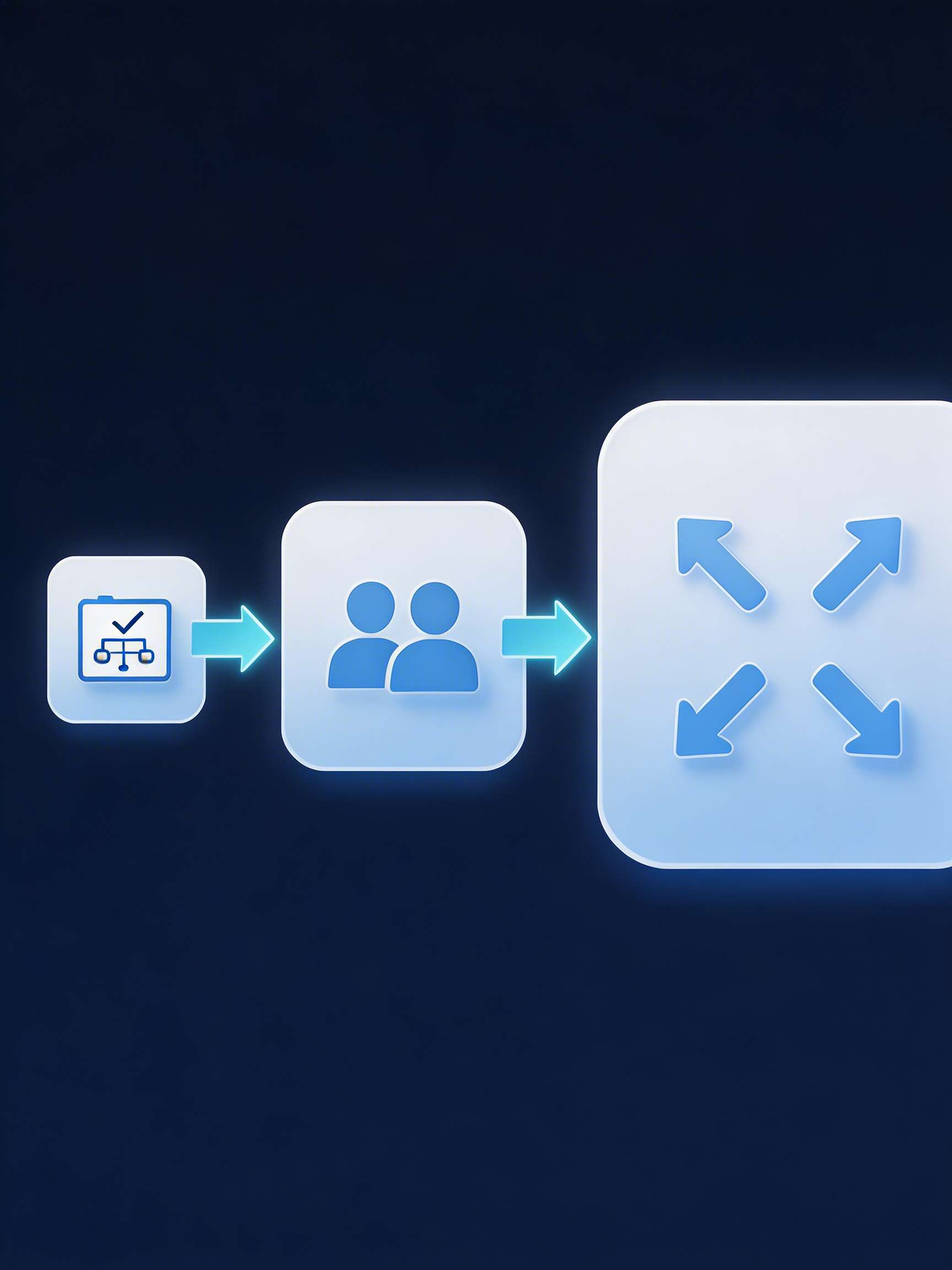
Building a scalable e-commerce platform is a journey. It starts with an MVP that validates your idea, evolves into a robust system capable of supporting growing demand, and eventually becomes an enterprise-grade solution built for global markets. Each stage requires thoughtful planning, the right technology, and a development partner that understands how to design for performance, flexibility, and long-term success.
If you’re planning to build or scale an e-commerce platform, whether you’re launching your MVP or preparing for enterprise expansion, connect with us to explore how we can help you create a powerful, future-ready e-commerce solution.
Not sure where to start?
Like what you see?
Take a look at our case studies and other projects we’ve done at Inneraktive
Book your MVP call