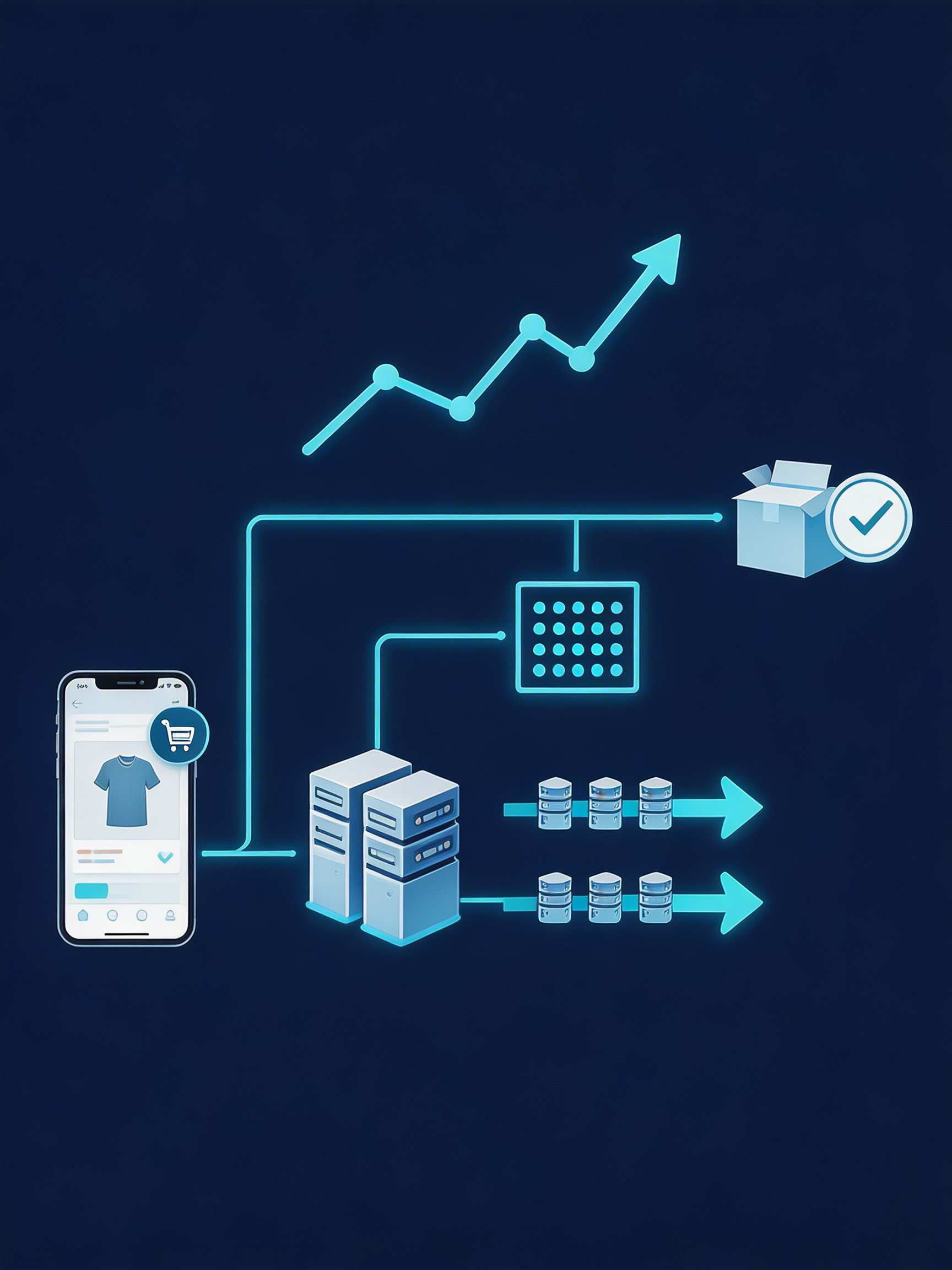
Scalable Tech Stacks for Ecommerce – What Works in 2026
E-commerce in 2026 is no longer defined by simply having an online store. It is defined by performance, flexibility, automation, data intelligence, and seamless customer experience across multiple channels. As digital competition intensifies, businesses are discovering that their technology stack is either enabling growth—or limiting it.
A scalable e-commerce tech stack is not about chasing trends. It is about selecting interoperable technologies that evolve with the business. Companies that architect their stacks intentionally are able to expand product lines, enter new markets, integrate new tools, and handle increasing traffic without rebuilding every few years.
The question is no longer “Which platform should we use?” It is “How do we design a stack that will still work at 5× our current scale?”
From Platform-Centric to Ecosystem-Centric Thinking
In earlier e-commerce models, businesses relied heavily on a single all-in-one platform. While this simplified launch, it created long-term dependency and rigidity. In 2026, scalable ecommerce is built on ecosystems rather than monolithic systems.
Modern stacks focus on modularity. Instead of one platform controlling everything, businesses use integrated systems that communicate via APIs. This approach allows components to evolve independently while remaining connected.
A scalable stack today typically separates:
- Frontend experience
- Backend commerce engine
- Content management
- Customer data systems
- Marketing automation
- Analytics and reporting
This separation ensures flexibility as operational complexity increases.
Headless and Composable Architectures Lead the Way
One of the most significant shifts in e-commerce technology has been the move toward headless and composable architecture. These models decouple the frontend experience from backend logic, enabling greater flexibility and performance.
In 2026, scalable ecommerce businesses are prioritising headless systems because they allow:
- Faster frontend innovation
- Improved performance optimisation
- Multi-channel expansion (web, mobile, marketplace, in-store)
- Easier integration with third-party tools
Composable commerce takes this further by allowing companies to assemble best-in-class tools for each function rather than relying on a single vendor’s ecosystem.
For high-growth ecommerce brands, this flexibility reduces the risk of vendor lock-in and future migration costs.
Cloud Infrastructure as the Foundation
Scalable e-commerce stacks in 2026 rely heavily on cloud-native infrastructure. Static hosting environments and rigid server setups no longer meet performance demands.
Cloud infrastructure enables automatic scaling during traffic spikes, ensuring stability during promotional campaigns or seasonal surges. It also improves global performance through distributed delivery networks.
Beyond performance, cloud-native systems support continuous deployment and rapid iteration. This agility allows businesses to release features faster and respond to market changes without disruption.
A stack designed for scale must treat infrastructure as a strategic asset, not just a hosting solution.
API-First Integration Strategy
In 2026, e-commerce stacks are defined by API-first thinking. Every system—from payment gateways to inventory management—must integrate cleanly and reliably.
As businesses scale, they introduce additional tools such as advanced CRM platforms, marketing automation engines, and enterprise resource planning systems. Without a strong API architecture, these integrations create bottlenecks.
API-first design ensures that:
- Systems communicate efficiently
- Data remains consistent across platforms
- New tools can be added without major restructuring
- Automation becomes easier to implement
Scalability depends on how easily the stack can adapt to new operational requirements.
Data and Personalisation at the Core
Customer expectations in 2026 revolve around personalisation. Generic experiences are no longer competitive. As a result, scalable ecommerce stacks must prioritise unified customer data and real-time analytics.
This requires integrating commerce data, behavioural tracking, and marketing systems into a centralised data layer. Businesses that achieve this can deliver personalised recommendations, dynamic pricing, and targeted communication.
However, data scalability must also include governance. As databases grow, security, compliance, and performance must be maintained.
The most successful ecommerce brands treat data infrastructure as a core component of their tech stack rather than a secondary tool.
Automation as a Growth Multiplier
Operational automation has become essential for e-commerce scalability. As order volume increases, manual processes introduce errors and slow growth.
Scalable stacks in 2026 support automation across:
- Order processing
- Inventory updates
- Marketing workflows
- Customer support routing
- Reporting and forecasting
Automation reduces operational overhead while improving consistency and customer satisfaction.
Technology stacks that support automation natively or through integrations create significant long-term efficiency gains.
Security and Compliance at the Enterprise Level
As e-commerce businesses grow, so does risk exposure. Payment processing, customer data, and regulatory compliance become increasingly complex.
Scalable tech stacks integrate security practices at every layer. Encryption, role-based access control, fraud detection, and data compliance mechanisms are embedded into the architecture.
Security cannot be treated as a plugin or afterthought. In 2026, enterprise-scale ecommerce requires proactive governance and risk management embedded in the stack itself.
Choosing Tools That Can Evolve
One of the most important principles in building scalable ecommerce stacks is selecting tools with strong ecosystems and active development roadmaps.
Technology evolves rapidly. Platforms that stagnate become bottlenecks. Businesses should evaluate vendor flexibility, API capabilities, and long-term roadmap alignment before committing to core systems.
The goal is not to choose the “most popular” stack but the one that aligns with the company’s growth vision and operational model.
Scalable stacks prioritise adaptability over convenience.
Avoiding Overengineering at Early Stages
While scalability is important, overengineering at the startup stage can waste resources. The key is building a stack that can evolve gradually rather than attempting to implement enterprise complexity on day one.
Growth-oriented architecture allows incremental expansion. Start lean, but design pathways for future enhancement.
The most effective ecommerce stacks are those that balance present needs with future scalability.
Designing for 2026 and Beyond
E-commerce success in 2026 is shaped by flexibility, speed, data intelligence, and automation. Businesses that treat their tech stack as a strategic growth engine outperform those that rely on rigid, all-in-one systems.
Scalable stacks are modular, cloud-native, API-driven, and data-centric. They enable innovation without forcing disruptive rebuilds.
As e-commerce complexity increases, the technology stack becomes the backbone of competitive advantage.
Build a Stack That Grows With You
If you are evaluating or restructuring your e-commerce tech stack for long-term scalability, Inneraktive helps growth-focused businesses design and implement modular, performance-driven e-commerce ecosystems. From headless architectures to integrated automation systems, our team aligns technology decisions with your expansion roadmap.
Connect with Inneraktive to build an ecommerce stack designed not just for today’s launch—but for tomorrow’s scale.