Headless CMS vs Traditional CMS: Choosing the Best for Your Dubai Enterprise
As enterprises in Dubai continue to accelerate their digital transformation, the systems used to manage and deliver content have become increasingly important. Websites, mobile apps, ecommerce platforms, and customer portals all rely on structured content to deliver consistent user experiences. The choice of content management system (CMS) can therefore influence performance, scalability, flexibility, and long-term digital strategy.
Two primary approaches dominate modern content management: traditional CMS and headless CMS. Each model offers distinct advantages and trade-offs. For enterprises operating in a fast-moving digital economy like Dubai, selecting the right architecture requires understanding how these systems work and how they support business growth.
Understanding Traditional CMS
A traditional CMS combines both the backend content management system and the frontend presentation layer in one integrated platform. This means that the system not only stores and organises content but also controls how that content is displayed on websites through built-in templates and themes.
Traditional CMS platforms have been widely used for years because they simplify website development and management. Marketing teams can create and update content through user-friendly dashboards, while the system automatically handles the visual layout and publishing process.
For enterprises with straightforward website requirements, traditional CMS platforms can offer efficiency and convenience. Content editors can manage pages, publish updates, and control site structure without relying heavily on development teams. This allows organisations to launch and maintain digital platforms quickly.
However, as digital ecosystems become more complex, tightly coupled systems can introduce limitations. Since the content and presentation layers are interconnected, making significant changes to user experiences or integrating new technologies can become more challenging.
Understanding Headless CMS
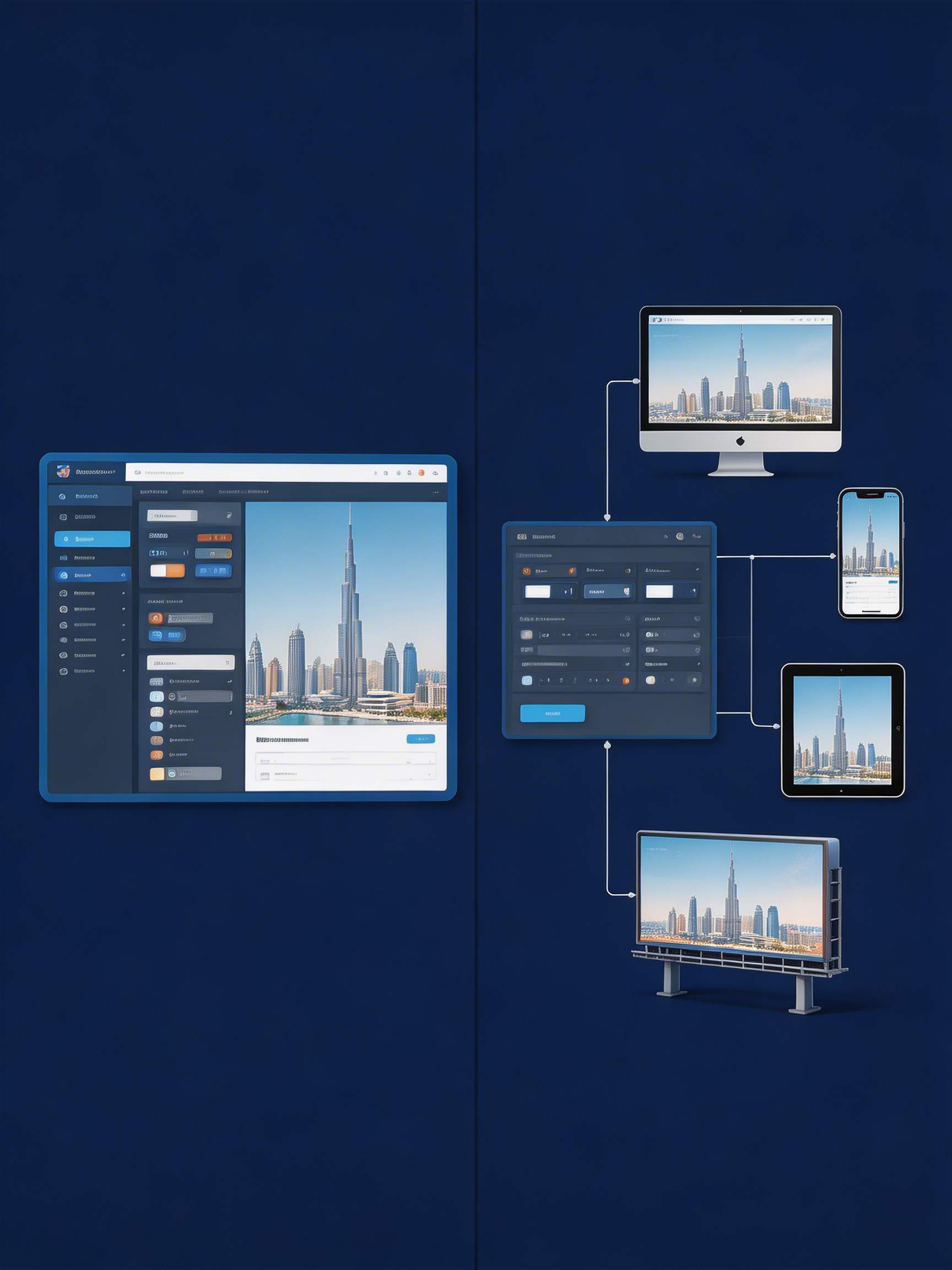
A headless CMS separates content management from content presentation. The backend system stores and organises content, but instead of controlling how that content appears, it delivers the data through APIs to various front-end applications.
This decoupled architecture provides greater flexibility for development teams. Content can be delivered to websites, mobile apps, kiosks, IoT devices, and other digital platforms simultaneously. The frontend experience can be built using modern frameworks while the CMS functions purely as a structured content repository.
For enterprises operating across multiple digital channels, headless CMS solutions enable greater adaptability. Businesses can create consistent content across platforms without duplicating effort, and developers have more freedom to optimise performance and user experience.
While headless architecture offers flexibility, it typically requires stronger technical planning and development expertise compared to traditional CMS platforms.
Content Delivery Across Multiple Channels
One of the major advantages of headless CMS architecture is its ability to support omnichannel content delivery. Modern enterprises often interact with customers through websites, mobile applications, digital signage, and other digital interfaces.
With a traditional CMS, content is usually designed primarily for a single website environment. Expanding content to additional platforms may require custom development or duplicated management processes.
A headless CMS allows content to be created once and distributed across multiple channels. This ensures consistency in messaging and reduces content management overhead. For enterprises managing complex digital ecosystems, this capability becomes increasingly valuable.
Performance and Scalability
Performance is a critical consideration for large organisations, particularly those handling high volumes of traffic or complex digital interactions. Website speed, responsiveness, and stability directly influence user engagement and conversion rates.
Traditional CMS platforms may rely on templates, plugins, and integrated features that can affect performance if not carefully managed. As websites grow in complexity, maintaining optimal speed and stability can require additional configuration.
Headless CMS architecture offers greater performance optimisation opportunities because frontend applications can be built using modern frameworks designed for speed and efficiency. Developers can optimise each component independently, improving overall performance and scalability.
For enterprises expecting significant digital growth, the flexibility to optimise infrastructure can be a major advantage.
Integration With Enterprise Systems
Enterprises typically operate with multiple digital systems, including CRM platforms, ERP systems, marketing automation tools, analytics platforms, and e-commerce engines. The CMS must integrate smoothly with these systems to ensure efficient data flow and operational visibility.
Traditional CMS platforms often support integrations through plugins or extensions. While convenient, these integrations may introduce dependencies that require ongoing maintenance.
Headless CMS solutions rely heavily on API-based integrations. This approach provides greater flexibility for connecting enterprise systems and allows organisations to design data workflows tailored to their operational needs.
For businesses with complex digital ecosystems, API-driven integration capabilities often make headless CMS architecture more attractive.
Editorial Workflow and Content Management
Content teams play a critical role in managing digital platforms, and the usability of the CMS interface directly affects productivity. Traditional CMS platforms are often designed with non-technical users in mind, offering visual editors and simplified publishing workflows.
Headless CMS platforms also provide editorial interfaces, but the experience may differ depending on how the frontend applications are structured. Content editors may work more closely with development teams to ensure content is structured properly for different channels.
Enterprises must evaluate whether their teams prioritise editorial simplicity or technical flexibility when choosing between these approaches.
Cost and Implementation Considerations
Traditional CMS solutions typically require lower initial development investment because they include built-in presentation layers and ready-to-use templates. This can make them attractive for organisations seeking quick implementation.
Headless CMS implementations often involve additional development work because frontend applications must be built separately. However, the long-term benefits of scalability and flexibility may justify the initial investment for enterprises with complex digital strategies.
The choice should be evaluated not only in terms of upfront cost but also long-term operational value.
Choosing the Best Option for Your Dubai Enterprise
Dubai’s digital landscape is highly competitive, with enterprises investing heavily in advanced digital experiences. The right CMS architecture should support innovation, scalability, and seamless customer engagement across platforms.
Traditional CMS platforms can be ideal for organisations with straightforward content needs and limited digital channels. They offer simplicity and fast deployment, making them effective for many business websites.
Headless CMS solutions are better suited for enterprises that operate across multiple digital platforms, require advanced integrations, or prioritise performance optimisation and future scalability.
Understanding your organisation’s digital strategy is the key to selecting the right approach.
Building the Right CMS Architecture for Growth
Selecting between a headless CMS and a traditional CMS is a strategic decision that affects how your enterprise manages content, delivers digital experiences, and scales its technology ecosystem. Inneraktive works with enterprises in Dubai to evaluate CMS architecture options and implement solutions that align with long-term digital transformation goals.
Whether your organisation requires the flexibility of a headless system or the efficiency of a traditional CMS, Inneraktive helps design and implement scalable platforms that support growth and innovation.
Connect with Inneraktive to explore the right CMS strategy for your enterprise.