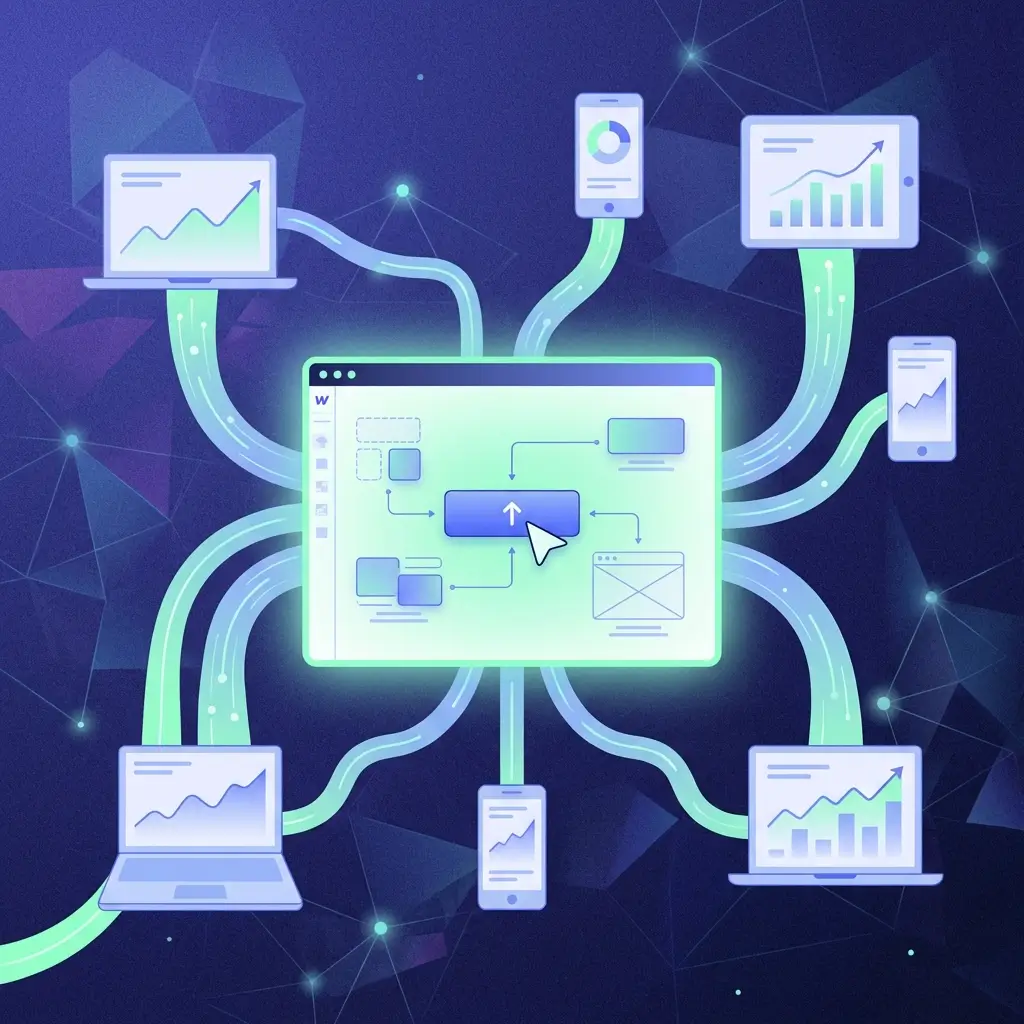
Why Webflow Is Becoming the Platform of Choice for Modern Digital Agencies
Over the past few years, the way digital agencies build websites has changed significantly. Clients now expect faster delivery, higher visual quality, better performance, and greater flexibility, all without ballooning budgets or long development cycles. As a result, many modern digital agencies are rethinking the tools they use to design and develop websites.
At the centre of this shift is Webflow. Once viewed as a niche no-code tool, Webflow has evolved into a powerful, production-ready platform that is increasingly becoming the preferred choice for agencies building modern, performance-driven websites. From startups to enterprises, agencies are adopting Webflow to meet rising expectations around speed, quality, and scalability.
The Changing Expectations of Agency Clients
Today’s clients are far more informed than they were even a few years ago. They compare digital experiences constantly, across brands, industries, and geographies. As a result, agencies are under pressure to deliver websites that load instantly, look refined, and are easy to update internally.
Modern agency clients expect:
- Faster turnaround times
- High-quality, custom design (not templates)
- Strong SEO and performance foundations
- Easy content management without developer dependency
- Scalable solutions that won’t need rebuilding in a year
Traditional development workflows often struggle to meet all of these expectations simultaneously. Webflow addresses many of these challenges at the platform level.
Webflow Bridges the Gap Between Design and Development
One of the biggest reasons agencies adopt Webflow is that it removes the traditional disconnect between design and development. In many legacy workflows, designers create layouts in design tools while developers recreate them in code — a process that introduces delays, inconsistencies, and rework.
Webflow changes this dynamic by allowing designers to build production-ready websites directly, using visual tools that generate clean, semantic code. This means:
- Fewer handoffs between teams
- Less interpretation and guesswork
- More accurate execution of design intent
- Faster iteration and feedback cycles
For agencies, this leads to higher quality output in less time.
Speed Without Sacrificing Quality
Speed has become a competitive advantage for modern agencies. Clients want to launch quickly, test ideas, and adapt their digital presence without long development timelines.
Webflow enables agencies to:
- Build and launch websites significantly faster
- Make real-time changes without breaking layouts
- Reduce dependency on large development teams
- Iterate designs quickly based on feedback
Importantly, this speed does not come at the expense of quality. Webflow’s output is clean, responsive, and performance-optimised by default, something agencies previously had to spend significant effort achieving.
Performance and SEO Built Into the Platform
Modern agencies are expected to deliver websites that perform well technically, not just visually. Page speed, clean structure, and SEO readiness are no longer optional.
Webflow provides:
- Fast, global CDN hosting
- Clean HTML and CSS output
- Automatic image optimisation
- SSL by default
- Direct control over metadata, redirects, and canonical tags
Because many performance best practices are handled at the platform level, agencies can focus on strategy and experience rather than constant technical troubleshooting.
Empowering Clients Without Losing Control
Another reason Webflow is attractive to agencies is its approach to content management. Clients want the ability to update content themselves, but agencies also want to ensure design consistency and brand integrity.
Webflow’s CMS allows agencies to:
- Create structured content systems
- Limit what clients can edit
- Prevent layout-breaking changes
- Maintain design consistency across pages
This balance reduces post-launch support issues while empowering clients to manage their own content confidently.
Scalability for Growing Brands
Modern agencies often work with clients that grow quickly — startups scaling into enterprises, or regional brands expanding globally. Platforms that work well at launch can become limiting later.
Webflow supports scalability through:
- Structured CMS architecture
- Reusable components and design systems
- Enterprise-grade hosting
- Support for complex layouts and interactions
While Webflow may not replace every backend-heavy system, it excels as a scalable frontend platform for marketing sites, content-driven platforms, and brand experiences.
Lower Long-Term Maintenance for Agencies
Traditional platforms often require ongoing maintenance — updates, plugin management, security patches, and compatibility checks. This creates hidden costs for agencies and clients alike.
Webflow reduces this overhead by managing:
- Hosting
- Security
- Platform updates
For agencies, this means fewer support tickets, lower maintenance burden, and more predictable project timelines. For clients, it means a more stable website experience.
Why Agencies in Markets Like Dubai Are Adopting Webflow Faster
In markets such as Dubai, agencies face particularly high expectations. Clients demand premium design, fast delivery, multilingual readiness, and strong performance, often under tight timelines.
Webflow aligns well with these demands by enabling agencies to:
- Deliver polished, high-performance websites quickly
- Support multilingual content more cleanly
- Meet SEO and speed expectations without complex setups
- Offer modern experiences that reflect global standards
As competition increases, agencies that adopt platforms like Webflow gain a meaningful operational and creative advantage.
Conclusion
Webflow’s rise among modern digital agencies is not driven by trends, but by practicality. As client expectations evolve, agencies need tools that support speed, quality, scalability, and performance — without adding complexity. Webflow delivers on these needs by unifying design and development into a streamlined, efficient workflow.
For agencies focused on building modern digital experiences, Webflow is less about “no-code” and more about better code, faster delivery, and smarter execution.
If you’re considering Webflow for your next website or looking to work with an agency that truly understands how to leverage the platform, Inneraktive helps businesses and brands build high-quality Webflow websites that balance performance, design, and long-term scalability. Get in touch with Inneraktive to explore how Webflow can support your digital goals.
Like what you see?
Take a look at our case studies and other projects we’ve done at Inneraktive
Book your MVP call


Your go-to digital clarity
library — coming soon.
less friction and more momentum. Made for founders, marketers, and lean teams
who want to move fast — and smart.