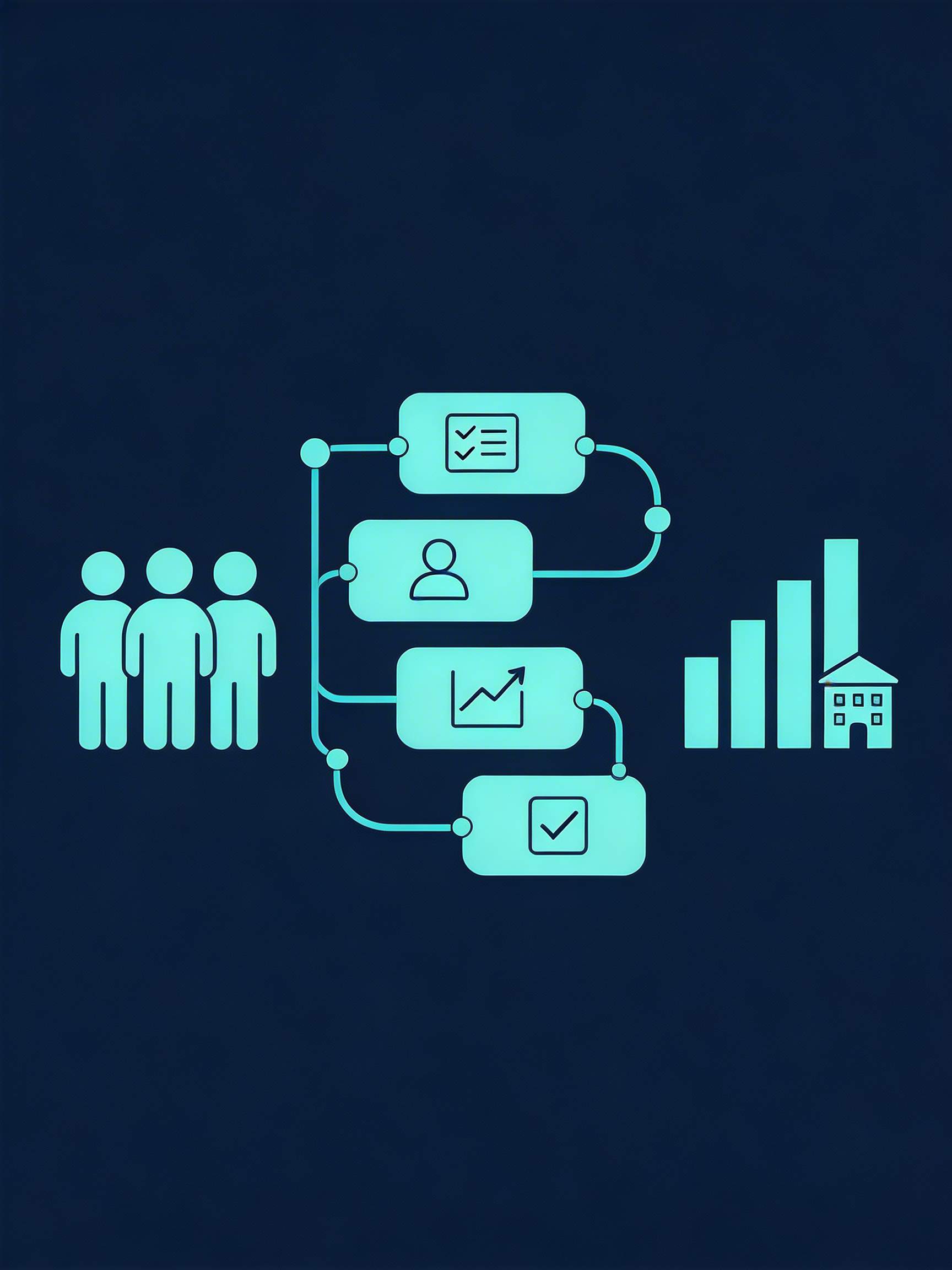
The Power of Customisable SaaS Workflows for Growing Businesses
As businesses grow, operational complexity increases. What once worked with spreadsheets, email threads, and basic software tools quickly becomes inefficient. Teams expand, customer volumes rise, processes become layered, and coordination across departments becomes more critical.
At this stage, many growing businesses adopt SaaS platforms to manage operations. However, not all SaaS systems are built equally. The real competitive advantage does not come from using SaaS alone — it comes from leveraging customisable SaaS workflows that align with how the business actually operates.
In 2026 and beyond, growth-focused companies are no longer satisfied with rigid, one-size-fits-all software. They are prioritising flexibility, automation, and workflow adaptability as core drivers of efficiency and scalability.
Why Standard SaaS Workflows Fall Short
Off-the-shelf SaaS platforms are designed for broad market use. They often include pre-built workflows that suit common business processes. For startups or small teams, this may be sufficient.
However, as companies scale, their processes become more nuanced. Approval hierarchies change. Customer journeys become more segmented. Internal reporting needs become more specific. Cross-department collaboration increases.
When SaaS platforms force businesses to adapt to predefined workflows, inefficiencies emerge. Teams may rely on manual workarounds, external tools, or duplicated data entry. Over time, these inefficiencies reduce productivity and create operational bottlenecks.
Growing businesses require workflows that evolve alongside them — not constrain them.
Customisable Workflows as a Scalability Enabler
Customisable SaaS workflows allow businesses to tailor processes to their operational model rather than conforming to generic templates.
This flexibility enables:
- Automated approval chains aligned with organisational structure
- Conditional logic for different customer segments
- Custom reporting pipelines
- Dynamic task routing between teams
- Integrated automation across departments
Instead of static processes, businesses gain adaptive systems that reflect real-world operations.
When workflows align with internal processes, productivity improves. Teams spend less time managing systems and more time driving outcomes.
Operational Efficiency Through Automation
One of the most significant benefits of customisable SaaS workflows is automation. As companies grow, manual intervention becomes costly and error-prone.
Custom workflows can automate tasks such as lead qualification, onboarding processes, order management, internal notifications, and reporting cycles. These automations reduce reliance on manual oversight and ensure consistency.
For example, a sales team can trigger automated follow-ups based on customer behaviour. Operations teams can route orders based on region or priority. Finance teams can automate invoice approval hierarchies based on transaction value.
This level of process automation reduces friction and improves speed without increasing headcount.
Improving Cross-Department Collaboration
As organisations expand, silos often emerge. Marketing, sales, operations, and customer support may operate within separate systems, limiting visibility.
Customisable SaaS workflows create structured collaboration pathways. Tasks, approvals, and notifications can be designed to move seamlessly across departments.
For growing businesses, this integrated flow reduces miscommunication and improves accountability. Each department understands its role within the larger process, supported by system-driven coordination.
Scalable workflows become the connective tissue of expanding teams.
Supporting Business Model Evolution
Growth rarely follows a straight line. Businesses pivot, expand service offerings, enter new markets, or introduce new revenue streams. Static workflows struggle to adapt to these shifts.
Customisable SaaS platforms allow organisations to adjust processes without rebuilding the entire system. New logic can be introduced, approval paths modified, and reporting structures expanded as the business evolves.
This flexibility protects companies from being locked into outdated operational models. Instead of migrating platforms every few years, businesses can iterate within the existing ecosystem.
The ability to adapt quickly becomes a competitive advantage.
Enhancing Customer Experience Through Process Precision
Operational workflows directly impact customer experience. Delays, miscommunication, or inconsistent handling of requests often stem from inefficient backend processes.
Customisable SaaS workflows improve customer-facing operations by ensuring:
- Faster response times
- Consistent service standards
- Automated status updates
- Structured escalation procedures
When internal systems are optimised, customer experience improves naturally.
Growing businesses that prioritise workflow precision often see improvements in retention and satisfaction, not just operational efficiency.
Data Visibility and Performance Monitoring
Custom workflows also enhance data tracking. By structuring processes intentionally, businesses can measure performance at each stage.
This includes monitoring:
- Conversion rates across funnel stages
- Approval turnaround times
- Operational bottlenecks
- Customer onboarding duration
- Revenue cycle efficiency
With structured workflows, performance data becomes more actionable. Leaders gain clearer insight into where improvements are needed.
For scaling companies, data-driven visibility is essential for maintaining control during expansion.
Avoiding Over-Complexity
While customisation is powerful, it must be implemented strategically. Over-engineering workflows can introduce unnecessary complexity.
Growing businesses should focus on designing workflows that balance automation with clarity. The goal is to simplify operations — not create rigid systems that are difficult to manage.
Effective SaaS workflow customisation requires thoughtful planning, structured logic, and long-term scalability considerations.
Customisable SaaS as a Strategic Investment
For growing businesses, SaaS should not merely be a tool for task management. It should function as an operational backbone.
Customisable workflows transform SaaS platforms from generic utilities into strategic enablers of growth. They reduce inefficiencies, improve collaboration, support business evolution, and enhance customer experience.
Companies that treat workflow design as a strategic priority rather than a technical detail position themselves for smoother expansion and higher operational resilience.
Build Workflows That Scale With You
If your organisation is adopting or restructuring a SaaS platform and needs workflows that align with real operational complexity, Inneraktive helps businesses design and implement customisable SaaS systems built for scalability. From workflow architecture to automation integration, our team ensures your digital systems evolve with your growth strategy — not limit it.
Connect with Inneraktive to build SaaS workflows designed for flexibility, efficiency, and long-term business expansion.