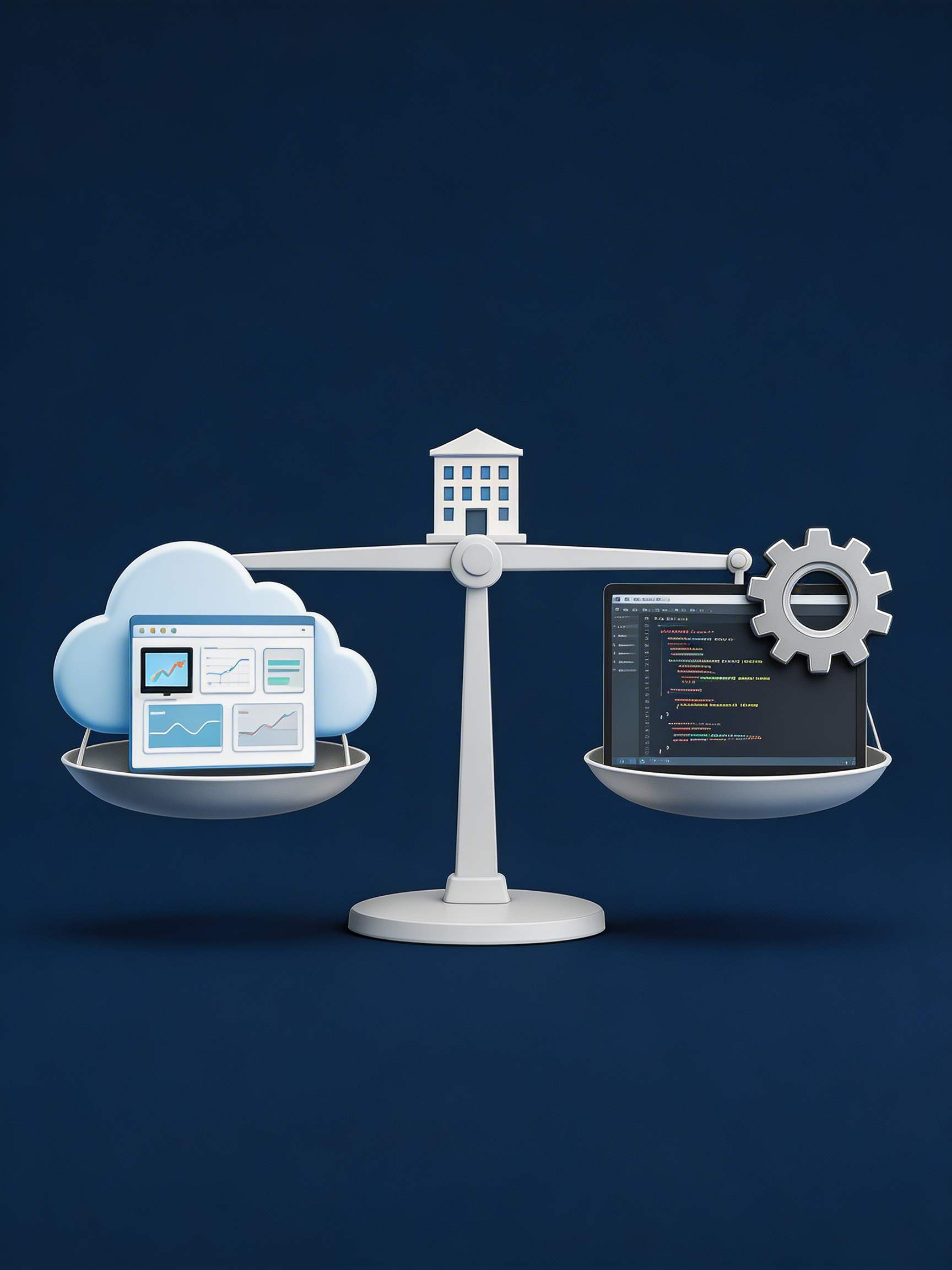
SaaS vs Custom Development: Which Is Right for Your Business in 2026?
As businesses move deeper into digital-first operations, choosing the right technology model has become a strategic decision rather than a purely technical one. One of the most common questions organisations face is whether to rely on Software-as-a-Service (SaaS) platforms or invest in custom software development.
In 2026, the answer is rarely universal. The right choice depends on a company’s operational complexity, growth ambitions, internal processes, and long-term digital strategy. While SaaS platforms promise speed and convenience, custom development offers control and scalability. Understanding how each option aligns with your business needs is critical for making the right decision.
Understanding SaaS Solutions
SaaS platforms provide ready-made software delivered through the cloud on a subscription basis. Businesses can access the system through a browser without worrying about infrastructure, updates, or system maintenance. Popular SaaS products cover everything from customer relationship management and marketing automation to e-commerce and financial management.
One of the biggest advantages of SaaS is its accessibility. Businesses can adopt a platform quickly and start using it almost immediately. This reduces the time and cost required to launch new digital systems. SaaS vendors also maintain the platform, which removes the burden of managing security patches, server maintenance, and software updates.
For many startups and small businesses, SaaS solutions provide a practical way to digitise operations without building software from scratch. Teams can focus on their core activities while relying on established platforms to manage operational workflows.
However, SaaS systems are designed for broad market use. This means they often follow predefined workflows and structures that may not perfectly match every organisation’s processes.
Understanding Custom Software Development
Custom development involves building software specifically tailored to a company’s operational needs. Instead of adapting workflows to fit an existing platform, businesses design systems that align with their unique processes, integrations, and long-term strategy.
Custom software can support specialised workflows, advanced automation, and complex integrations between internal systems. It allows businesses to build exactly the functionality they require rather than relying on a fixed feature set.
In 2026, custom development is becoming increasingly important for companies whose competitive advantage relies on digital capabilities. E-commerce platforms, SaaS products, logistics systems, and operational dashboards often require tailored solutions that off-the-shelf platforms cannot provide.
While the initial investment is typically higher, custom software offers long-term flexibility and ownership. Companies can expand the system as their business evolves, without depending on the limitations or pricing changes of a third-party provider.
Comparing Cost Structures
Cost is often the first factor businesses consider when choosing between SaaS and custom development. SaaS platforms usually have lower upfront costs because they operate on subscription-based pricing models. Companies pay monthly or annual fees depending on usage, number of users, or feature tiers.
Custom development requires a higher initial investment because the software must be designed and built from the ground up. However, once developed, the company owns the system and typically pays only for maintenance, hosting, and future improvements.
Over time, the total cost of ownership can shift. For businesses with large teams or complex operations, SaaS subscription fees can increase significantly as usage grows. Custom software, on the other hand, often becomes more cost-efficient at scale because the core platform remains under the company’s control.
Evaluating long-term operational costs rather than only initial investment helps organisations make a more informed decision.
Scalability and Growth Considerations
Scalability is another important factor when deciding between SaaS and custom development. As businesses grow, their operational requirements evolve. New departments emerge, workflows become more complex, and systems must integrate with additional tools.
SaaS platforms scale effectively within predefined limits. Vendors regularly update their systems and introduce new features, allowing businesses to benefit from ongoing improvements without internal development work.
However, SaaS platforms may struggle to support highly customised workflows or specialised operational requirements. When companies need unique integrations or automation that fall outside the platform’s standard capabilities, limitations become apparent.
Custom software provides greater scalability for complex operations. Businesses can expand the system to support new markets, product lines, or services without being constrained by vendor restrictions.
Integration and Data Control
Modern organisations rely on multiple systems to operate efficiently. CRM platforms, marketing automation tools, accounting systems, logistics platforms, and analytics dashboards must work together seamlessly.
SaaS platforms typically provide integrations with other widely used tools. These integrations often work well for common business scenarios. However, deeper integrations or unique data workflows may not always be possible.
Custom software allows organisations to design integrations that align perfectly with their internal systems. Data can flow freely between departments, enabling more comprehensive reporting and automation.
This level of control is particularly valuable for businesses that rely heavily on data-driven decision-making.
Flexibility and Workflow Alignment
Every organisation develops its own processes over time. These processes reflect internal culture, team structures, and operational priorities.
SaaS platforms require businesses to adopt the workflow structures built into the system. In some cases, this standardisation can improve efficiency by encouraging best practices. In other cases, it may force teams to adapt their operations in ways that reduce productivity.
Custom development allows businesses to design workflows that match their exact needs. Approval processes, reporting structures, and automation rules can be configured precisely to support internal operations.
For companies with specialised or evolving workflows, this flexibility can be a significant advantage.
When SaaS Is the Right Choice
SaaS platforms are often the best option for businesses that need quick deployment and standard functionality. Companies with limited internal technical resources or straightforward operational requirements can benefit greatly from SaaS solutions.
Startups frequently adopt SaaS tools to minimise upfront investment and focus on validating their business models. SaaS platforms also work well for organisations that prefer predictable subscription pricing and vendor-managed infrastructure.
When operational complexity remains moderate and workflows align with industry standards, SaaS platforms provide an efficient and reliable solution.
When Custom Development Makes More Sense
Custom development becomes the better choice when businesses require advanced functionality, unique workflows, or extensive integrations. Companies building proprietary digital products or operating in specialised industries often need solutions that cannot be achieved through standard platforms.
Growing organisations that anticipate rapid expansion may also benefit from custom systems designed to support their long-term vision. Custom development ensures that technology evolves alongside the business rather than limiting it.
For companies whose competitive advantage depends on digital innovation, custom software can become a powerful strategic asset.
Choosing the Right Approach
Ultimately, the decision between SaaS and custom development should align with the organisation’s growth strategy, operational complexity, and technology roadmap. Businesses should evaluate not only current needs but also how those needs will evolve over the next five to ten years.
Rather than focusing solely on cost or convenience, organisations should consider scalability, integration capabilities, data ownership, and long-term flexibility.
Making the right choice today can prevent costly platform migrations and operational disruptions in the future.
Planning the Right Technology Strategy
Choosing between SaaS and custom development requires careful evaluation of your business processes, growth ambitions, and digital infrastructure. Inneraktive works with businesses to assess these factors and design technology strategies that support long-term scalability and efficiency. Whether implementing SaaS platforms or building tailored digital solutions, the goal is to ensure that technology enables growth rather than creating limitations.
Connect with Inneraktive to explore the right technology approach for your business in 2026 and beyond.